Overview
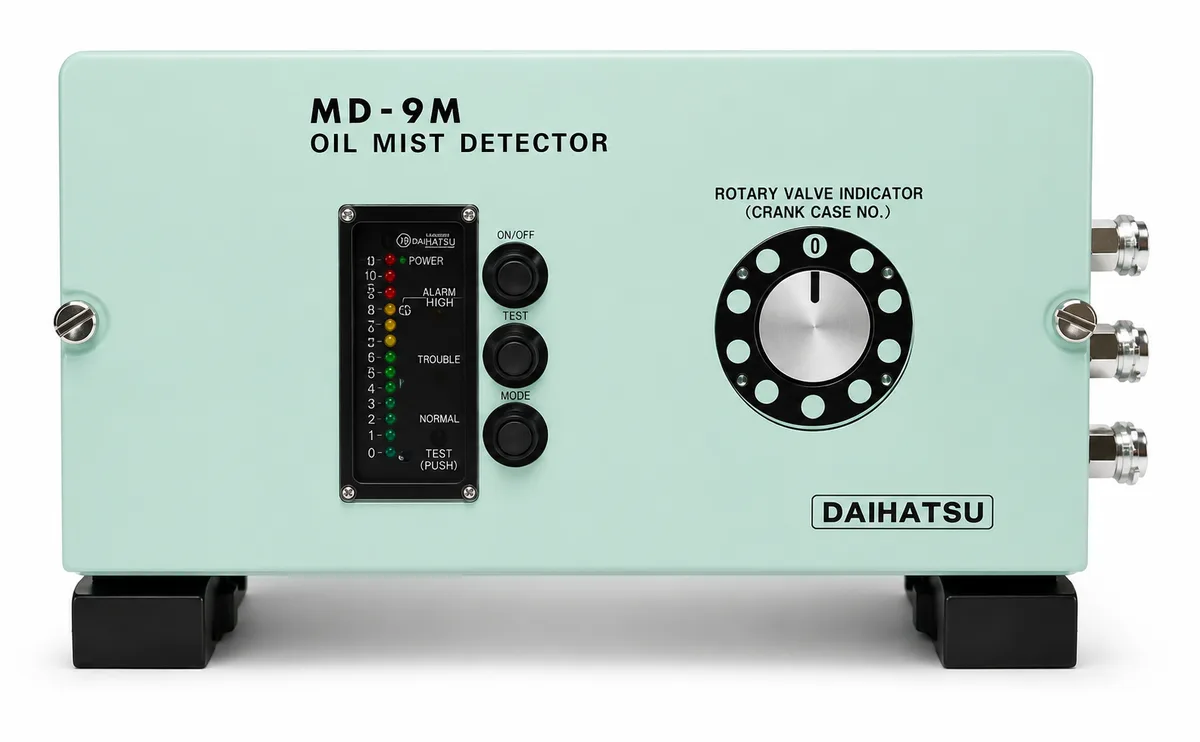
Daihatsu MD-9M Oil Mist Detector | Marine Crankcase Oil Mist Detection System for Main Engine Protection
Modern marine diesel engines operate under high temperatures and heavy mechanical loads, making continuous engine monitoring essential for safe and reliable operation. One of the most critical safety systems installed on medium and large marine engines is the Oil Mist Detector (OMD), which helps identify abnormal oil mist concentrations inside the crankcase before they develop into hazardous conditions.
The Daihatsu MD-9M Oil Mist Detector is a dedicated marine engine safety monitoring system designed to continuously monitor crankcase oil mist levels. By providing early warning of abnormal operating conditions, it enables engine room personnel to investigate potential problems before they lead to serious engine damage or crankcase explosions.
Commonly known as the Daihatsu MD-9M Oil Mist Detector, MD-9M OMD, or Daihatsu Crankcase Oil Mist Detector, this system is widely used on Daihatsu marine diesel engines installed on commercial vessels, offshore support vessels, cargo ships, and power generation applications.
At Ship Care Service, we supply genuine Daihatsu MD-9M Oil Mist Detectors, replacement parts, accessories, and technical support for marine operators seeking dependable engine monitoring solutions.
What is the Daihatsu MD-9M Oil Mist Detector?
The Daihatsu MD-9M Oil Mist Detector is an electronic monitoring system designed to continuously sample air from individual crankcase compartments and measure the concentration of oil mist suspended within the crankcase atmosphere.
During normal engine operation, only minimal oil mist is present inside the crankcase. However, abnormal conditions such as bearing overheating, excessive friction, lubrication failure, or mechanical wear can rapidly increase oil mist concentration. If left undetected, these conditions may lead to dangerous crankcase explosions and severe engine damage.
The MD-9M continuously monitors these conditions and alerts the engine crew whenever oil mist levels exceed preset alarm thresholds, allowing timely inspection and corrective action.
Why Oil Mist Detection is Important
Marine diesel engines represent one of the most valuable assets onboard a vessel. Protecting these engines from internal failures is essential for operational safety, equipment reliability, and minimizing costly downtime.
An effective oil mist detection system helps operators:
Detect abnormal crankcase conditions at an early stage
Reduce the risk of crankcase explosions
Protect critical engine components
Improve operational safety
Minimize unexpected engine shutdowns
Support planned maintenance activities
Reduce repair costs caused by major engine failures
Continuous monitoring allows engineers to respond before minor mechanical issues develop into significant damage.
How the Daihatsu MD-9M Oil Mist Detector Works
The Daihatsu MD-9M continuously monitors the atmosphere inside the engine crankcase through a network of sampling pipes connected to each crankcase compartment.
Step 1 – Air Sampling
The system automatically draws small air samples from each monitored crankcase space at regular intervals.
Step 2 – Oil Mist Analysis
The sampled air passes through the detector, where electronic sensing technology measures the concentration of oil mist particles.
Step 3 – Continuous Monitoring
The detector compares the measured oil mist concentration with its programmed alarm limits.
Under normal operating conditions, measurements remain within the acceptable range.
Step 4 – Alarm Activation
If oil mist concentration exceeds the preset alarm threshold, the system immediately activates visual and audible alarms, allowing engine personnel to investigate the affected crankcase compartment.
Depending on the engine protection arrangement, alarm signals may also be integrated with the vessel's engine monitoring and alarm system.
Key Features of the Daihatsu MD-9M Oil Mist Detector
Continuous Crankcase Monitoring
The system continuously monitors oil mist concentration without interrupting normal engine operation, providing ongoing protection throughout the engine's operating cycle.
Early Fault Detection
By detecting increasing oil mist levels at an early stage, the MD-9M helps engineers identify developing mechanical problems before they become critical.
Automatic Sequential Sampling
The detector automatically samples each crankcase compartment in sequence, eliminating the need for manual inspection during routine engine operation.
Fast Alarm Response
When abnormal oil mist concentrations are detected, the system provides immediate warning to enable prompt investigation and corrective action.
Reliable Marine Design
Designed specifically for marine environments, the MD-9M is built to withstand conditions commonly encountered in engine rooms, including:
Easy Operation
The detector is designed for straightforward daily operation, allowing engine room personnel to monitor system status without complex procedures.
Supports Preventive Maintenance
Oil mist monitoring provides valuable information about engine condition, helping maintenance teams identify potential issues before they result in major failures.
Typical Applications
The Daihatsu MD-9M Oil Mist Detector is suitable for a wide range of marine and industrial applications where crankcase monitoring is required.
Typical applications include:
Commercial Cargo Ships
Provides continuous engine safety monitoring during long voyages.
Oil and Chemical Tankers
Supports reliable engine protection during demanding marine operations.
Container Vessels
Helps maintain uninterrupted propulsion system performance.
Offshore Support Vessels
Provides dependable crankcase monitoring in challenging offshore environments.
Tug Boats
Protects propulsion engines operating under frequent load variations.
Marine Power Plants
Supports stationary diesel engines used for marine and industrial power generation.
Shipyards
Installed during engine overhauls, vessel construction, and modernization projects.
Industries We Serve
The Daihatsu MD-9M Oil Mist Detector is widely used across:
Who Uses the Daihatsu MD-9M Oil Mist Detector?
This system is commonly used by:
Why Choose the Daihatsu MD-9M Oil Mist Detector?
The Daihatsu MD-9M remains a trusted crankcase monitoring solution because it offers:
Continuous oil mist monitoring
Early warning of abnormal engine conditions
Reliable electronic sensing
Automatic crankcase sampling
Durable marine construction
Easy daily operation
Improved engine safety
Support for preventive maintenance programs
Its dependable performance makes it an important component of marine engine protection systems used on commercial vessels and offshore installations.
Technical Overview
The Daihatsu MD-9M Oil Mist Detector is an electronic engine protection system designed to continuously monitor oil mist concentration inside the crankcase of marine diesel engines. The system automatically samples air from each crankcase compartment and analyzes the oil mist concentration to provide early warning of abnormal engine conditions.
Its primary function is to help prevent serious engine damage by detecting developing faults before they lead to crankcase explosions or major mechanical failures.
Note: Exact specifications may vary depending on the engine model, installation configuration, and production version. Always verify technical details with the manufacturer's documentation or the equipment nameplate.
| Specification |
Details |
| Product Name |
Daihatsu MD-9M Oil Mist Detector |
| Manufacturer |
Daihatsu Diesel Mfg. Co., Ltd. |
| Equipment Type |
Marine Oil Mist Detection System |
| Monitoring Method |
Automatic Sequential Crankcase Sampling |
| Detection Principle |
Electronic Oil Mist Concentration Monitoring |
| Display |
Digital Control & Alarm Display |
| Alarm Function |
Visual & Audible Alarm |
| Installation |
Marine Diesel Engine |
| Typical Application |
Main & Auxiliary Marine Diesel Engines |
Main Components of the Daihatsu MD-9M Oil Mist Detector
Understanding the major components helps simplify maintenance and troubleshooting.
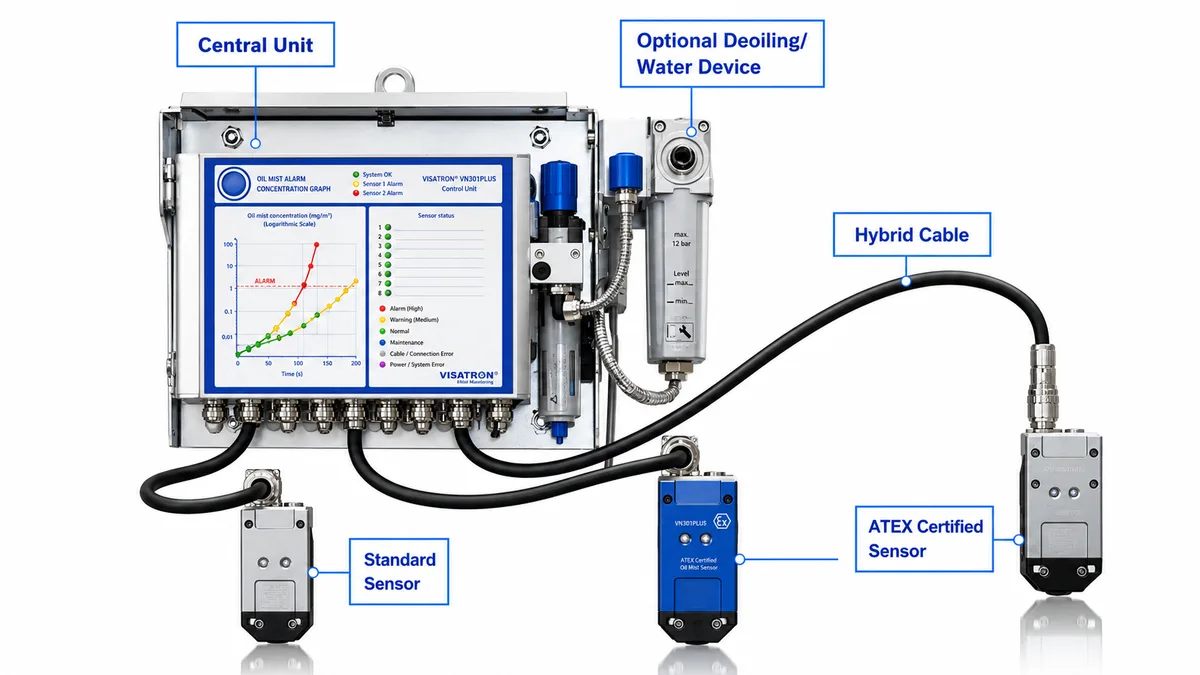
Oil Mist Detector Control Unit
The control unit serves as the central processor of the system.
Its functions include:
The control unit continuously evaluates sensor data and activates alarms whenever abnormal oil mist concentrations are detected.
Sampling Unit
The sampling unit automatically collects air samples from each crankcase compartment.
A controlled sampling sequence ensures that every monitored crankcase space is checked at regular intervals during engine operation.
Sampling Pipes
Sampling pipes connect each crankcase compartment to the detector.
Proper installation and regular inspection help maintain consistent airflow and accurate measurements.
Oil Mist Sensor
The sensing element measures the concentration of oil particles suspended in the sampled air.
Stable sensor performance is essential for reliable early fault detection.
Alarm System
When oil mist concentration exceeds the programmed threshold, the detector activates:
Audible Alarm
Visual Alarm
Alarm Output Signal
Depending on the vessel's automation system, alarm outputs may also be transmitted to the engine monitoring system or Integrated Alarm Monitoring System (AMS).
Working Principle
The Daihatsu MD-9M operates automatically while the engine is running.
Step 1 – Air Sampling
Air is drawn sequentially from each crankcase compartment through the sampling pipe network.
Step 2 – Oil Mist Measurement
The sampled air enters the detector, where the oil mist concentration is measured electronically.
Step 3 – Data Analysis
The detector continuously compares measured values against preset alarm thresholds.
Under normal operating conditions, readings remain within acceptable limits.
Step 4 – Alarm Activation
If oil mist concentration rises beyond the allowable level, the system immediately generates an alarm, allowing engineers to investigate the affected crankcase compartment before severe damage occurs.
Advantages of the Daihatsu MD-9M
Continuous Engine Protection
The detector operates continuously during engine operation, providing ongoing monitoring without manual intervention.
Early Fault Identification
The system helps identify developing problems such as:
Early detection allows maintenance to be planned before catastrophic failures occur.
Improved Crew Safety
Monitoring oil mist concentration reduces the likelihood of dangerous crankcase explosions, contributing to safer engine room operations.
Reliable Marine Construction
The MD-9M is designed for demanding marine environments, including:
Low Routine Maintenance
The detector requires routine inspection and cleaning but is designed for dependable long-term operation when maintained according to manufacturer recommendations.
Routine Maintenance
Preventive maintenance helps maintain reliable system performance.
Before Engine Operation
Inspect:
Alarm indicators
Sampling lines
Control unit
Power supply
System status
Confirm that no alarm or fault indications are present.
Weekly Inspection
Check:
Sampling pipe condition
Connections
Display operation
Alarm functions
Visible contamination
Monthly Inspection
Inspect:
Remove any accumulated dust or oil deposits if required.
Annual Maintenance
Recommended activities include:
Complete functional inspection
Sensor performance verification
Sampling system cleaning
Electrical inspection
Alarm verification
Calibration check (if applicable)
Maintain inspection records as part of the vessel's Planned Maintenance System (PMS).
Common Operational Problems
Although the MD-9M is designed for reliable operation, certain issues may occur during service.
Problem: False Alarm
Possible Causes
Recommended Solution
Inspect the sampling system, clean affected components, and verify normal airflow before restarting the system.
Problem: No Alarm Response
Possible Causes
Recommended Solution
Inspect the power supply, electrical wiring, and alarm outputs before replacing components.
Problem: Sampling Failure
Possible Causes
Blocked sampling pipe
Damaged tubing
Air leakage
Internal pump issue
Recommended Solution
Inspect and clean the sampling lines, tighten connections, and verify the sampling system is operating correctly.
Problem: Display Not Operating
Possible Causes
Recommended Solution
Verify input power, inspect wiring connections, and check system fuses before further diagnosis.
Problem: Frequent System Fault Indication
Possible Causes
Sensor contamination
Sampling obstruction
Electrical interference
Aging components
Recommended Solution
Perform a complete system inspection and replace worn components where necessary.
Calibration Recommendations
To maintain reliable monitoring performance, the system should undergo periodic functional verification and calibration where specified by the manufacturer.
Calibration checks are recommended:
During scheduled maintenance
After sensor replacement
After major engine repairs
Following extended system downtime
As required by company maintenance procedures
Genuine Spare Parts Available
Ship Care Service supplies genuine replacement parts for the Daihatsu MD-9M Oil Mist Detector, including:
Oil Mist Sensors
Control Unit Components
Sampling Pipes
Sampling Manifolds
Air Filters
Alarm Modules
Display Components
Power Supply Components
Connectors
Wiring Assemblies
Mounting Hardware
Replacement Accessories
Availability depends on the model revision and production series.
Buying Guide
Before purchasing a Daihatsu MD-9M Oil Mist Detector or replacement components, consider the following:
Verify Engine Compatibility
Confirm that the detector is compatible with your specific Daihatsu engine model and existing monitoring system.
Check Existing Part Numbers
Providing the equipment model number, serial number, or nameplate details helps ensure the correct replacement unit or spare parts are supplied.
Consider Spare Parts Availability
Selecting genuine replacement components helps maintain system reliability and long-term performance.
Choose an Experienced Supplier
Work with a supplier that can provide technical guidance, genuine products, and after-sales support for marine engine safety systems.
Why Marine Operators Trust the Daihatsu MD-9M
The Daihatsu MD-9M continues to be widely used because it offers:
Reliable oil mist detection
Continuous crankcase monitoring
Automatic sequential sampling
Fast alarm response
Durable marine construction
Support for preventive maintenance
Enhanced engine protection
Long operational service life