Overview
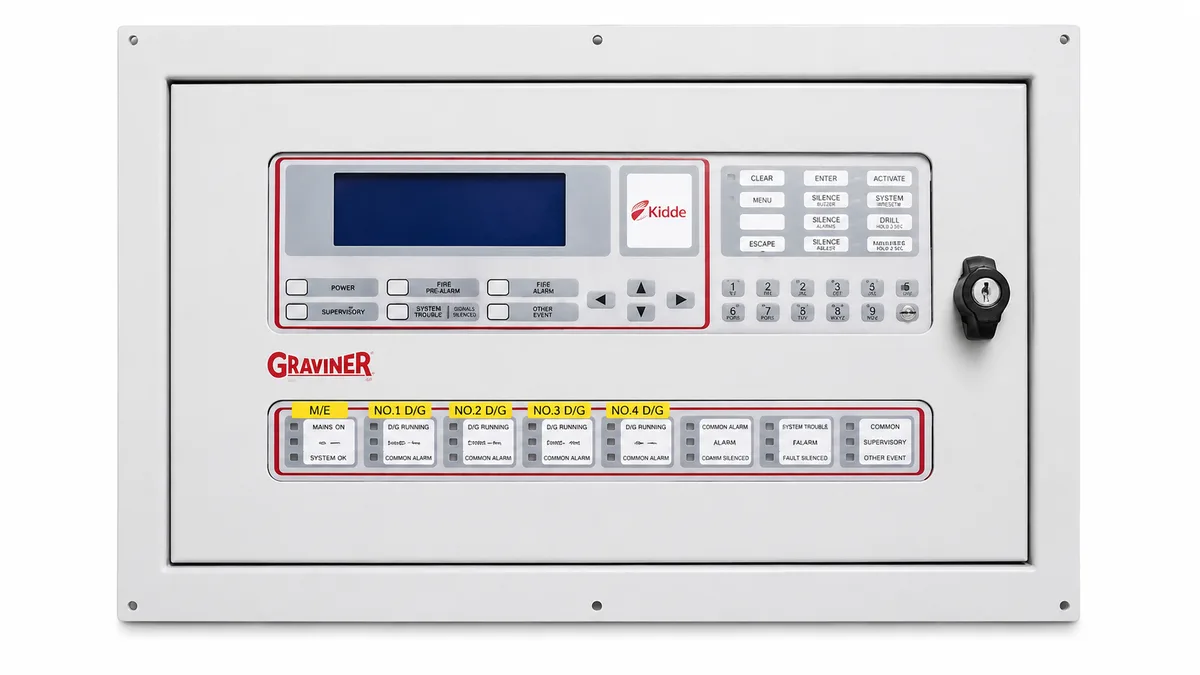
Graviner MK5 Oil Mist Detector | Marine Crankcase Oil Mist Detection System for Diesel Engine Protection
Protecting marine diesel engines from crankcase explosions is one of the most important aspects of engine safety. Excessive oil mist generated by overheated bearings, lubrication failures, or abnormal friction can rapidly develop into hazardous conditions if not detected in time. The Graviner MK5 Oil Mist Detector was developed to continuously monitor crankcase oil mist density and provide early warning before serious engine damage occurs.
The Graviner MK5 Oil Mist Detector is a well-established analogue oil mist detection system that has been installed on thousands of commercial vessels worldwide. Designed by Kidde Graviner, the MK5 continuously samples crankcase air, measures oil mist density using an optical detection principle, and activates alarms whenever oil mist concentration exceeds preset safety limits.
Although the MK5 has now been superseded by newer generations such as the MK7, it remains installed on many vessels worldwide. Genuine spare parts, replacement components, servicing, and refurbishment continue to be important for operators maintaining existing systems.
At Ship Care Service, we supply genuine Graviner MK5 Oil Mist Detectors, replacement parts, accessories, and technical support for commercial vessels, offshore installations, shipyards, and marine service companies.
What is the Graviner MK5 Oil Mist Detector?
The Graviner MK5 Oil Mist Detector is an electronic engine protection system that continuously monitors oil mist concentration inside diesel engine crankcases.
The system automatically samples air from each crankcase compartment and passes it through an optical measuring chamber. By comparing the measured oil mist density with preset alarm thresholds, the detector provides early warning of abnormal engine conditions before major mechanical damage or crankcase explosions occur.
The MK5 has been widely used on:
Why Oil Mist Detection is Important
Marine diesel engines operate continuously under heavy mechanical loads. Overheating bearings, lubrication failures, and excessive friction may generate increasing concentrations of oil mist inside the crankcase.
Continuous monitoring helps operators:
Detect abnormal engine conditions early
Reduce the risk of crankcase explosions
Protect expensive engine components
Improve crew safety
Reduce unplanned engine downtime
Support preventive maintenance
Minimize repair costs
Early warning allows engineers to investigate developing faults before they become major failures.
How the Graviner MK5 Works
The Graviner MK5 operates automatically while the engine is running.
Step 1 – Sequential Air Sampling
The system continuously draws air samples from each crankcase compartment through a dedicated sampling system.
Step 2 – Optical Oil Mist Measurement
Each air sample passes through an optical measuring chamber where a light source and photocell determine the oil mist density by measuring optical obscuration.
Step 3 – Continuous Monitoring
The control unit continuously compares the measured oil mist density against programmed alarm thresholds.
Step 4 – Alarm Activation
If oil mist density exceeds the configured alarm level, the detector immediately activates visual and audible alarms. Depending on the vessel's automation system, the alarm may also initiate engine slowdown or shutdown functions.
Key Features of the Graviner MK5 Oil Mist Detector
Continuous Crankcase Monitoring
The MK5 continuously monitors crankcase conditions while the engine is operating, providing reliable protection without interrupting engine performance.
Optical Detection Technology
The system uses an optical measurement principle in which oil mist density is determined by the reduction of light reaching a photocell inside the measuring chamber.
Automatic Sequential Sampling
The detector automatically samples each crankcase compartment in sequence, ensuring comprehensive monitoring across the engine.
Fast Alarm Response
When abnormal oil mist density is detected, the system generates immediate alarm signals, enabling prompt inspection of the affected engine.
Proven Marine Reliability
The Graviner MK5 has been installed on commercial vessels for decades and has established a reputation for dependable crankcase monitoring in demanding marine environments.
Supports Preventive Maintenance
Continuous monitoring provides valuable information about engine condition, helping engineers identify developing faults before significant mechanical damage occurs.
Typical Applications
The Graviner MK5 Oil Mist Detector is suitable for a wide range of marine engine installations.
Typical applications include:
Commercial Cargo Ships
Continuous crankcase protection for propulsion and auxiliary engines.
Oil & Chemical Tankers
Reliable engine safety during cargo transportation.
Container Vessels
Supports uninterrupted engine monitoring during long voyages.
Bulk Carriers
Helps identify developing crankcase faults before major failures occur.
Offshore Support Vessels
Provides dependable oil mist monitoring under demanding offshore operating conditions.
Marine Power Generation
Suitable for auxiliary diesel engines used for onboard electrical power generation.
Shipyards
Installed during engine overhauls, retrofit projects, and vessel modernization.
Industries We Serve
The Graviner MK5 Oil Mist Detector is widely used across:
Who Uses the Graviner MK5?
Typical users include:
Why Choose the Graviner MK5 Oil Mist Detector?
The Graviner MK5 continues to be supported by many vessel operators because it offers:
Proven optical oil mist detection
Continuous crankcase monitoring
Automatic sequential sampling
Reliable alarm generation
Durable marine construction
Straightforward operation
Long service history
Support for preventive maintenance programs
For vessels still operating the MK5, maintaining the system with genuine replacement parts and proper servicing helps ensure continued engine protection and operational reliability.
Technical Overview
The Graviner MK5 Oil Mist Detector is an electronic marine engine protection system designed to continuously monitor oil mist concentration inside the crankcase of diesel engines. Using an optical detection principle, the system samples air from individual crankcase compartments and measures oil mist density to provide early warning of abnormal engine conditions.
The detector is designed to help reduce the risk of crankcase explosions by identifying developing mechanical faults such as bearing overheating, lubrication failure, or excessive friction before they result in serious engine damage.
Note: Technical specifications may vary depending on the engine configuration, installation arrangement, and equipment version. Always verify technical details using the equipment nameplate or the manufacturer's documentation.
| Specification |
Details |
| Product Name |
Graviner MK5 Oil Mist Detector |
| Manufacturer |
Kidde Graviner |
| Equipment Type |
Marine Oil Mist Detection System |
| Detection Principle |
Optical Oil Mist Measurement |
| Monitoring Method |
Automatic Sequential Sampling |
| Display |
Control Panel with Alarm Indication |
| Alarm Function |
Visual & Audible Alarm |
| Installation |
Marine Diesel Engine |
| Typical Application |
Main & Auxiliary Marine Diesel Engines |
Main Components of the Graviner MK5 Oil Mist Detector
The MK5 consists of several integrated components that work together to provide continuous crankcase monitoring.
Control Unit
The control unit is the central processing system responsible for:
It continuously evaluates measurements from every monitored crankcase compartment.
Sampling Unit
The sampling unit automatically draws air from each crankcase compartment through dedicated sampling lines.
This automatic process allows every monitoring point to be checked without interrupting engine operation.
Optical Measuring Chamber
The measuring chamber is one of the most important components of the MK5.
Inside the chamber:
A light source projects a beam through the sampled air.
A photocell measures the amount of transmitted light.
Oil mist particles reduce light intensity.
The system calculates oil mist concentration based on the amount of light received.
This optical measurement method provides reliable detection of abnormal oil mist levels.
Sampling Pipes
Sampling pipes connect each crankcase compartment to the detector.
Regular inspection ensures:
Alarm System
If oil mist density exceeds the programmed alarm level, the detector activates:
Audible Alarm
Visual Alarm
Alarm Output Signal
Depending on the vessel's automation system, alarms may also be transmitted to the engine monitoring system or engine protection circuits.
Working Principle
The Graviner MK5 continuously operates whenever the engine is running.
Step 1 – Automatic Air Sampling
The detector sequentially draws air samples from each crankcase compartment using its internal sampling system.
Step 2 – Optical Measurement
Each sample enters the optical measuring chamber where the oil mist concentration is determined by measuring light transmission through the sampled air.
Step 3 – Continuous Analysis
The control unit continuously compares measured oil mist density with preset alarm limits.
Normal engine operation produces low oil mist concentrations that remain within the acceptable operating range.
Step 4 – Alarm Activation
When oil mist concentration exceeds the programmed alarm threshold, the system immediately activates visual and audible alarms, allowing engine personnel to investigate the affected crankcase compartment.
Advantages of the Graviner MK5
Continuous Engine Protection
The detector continuously monitors crankcase conditions throughout engine operation, providing uninterrupted engine protection.
Proven Optical Detection Technology
The optical measurement principle has been successfully used in marine engine protection for many years and provides dependable monitoring of oil mist concentration.
Automatic Sequential Sampling
Every crankcase compartment is monitored automatically, reducing the need for manual inspection during normal engine operation.
Reliable Alarm Response
Rapid alarm activation enables engineers to investigate abnormal conditions before severe engine damage develops.
Durable Marine Design
The MK5 is designed for reliable operation under demanding engine room conditions, including:
High temperatures
Continuous vibration
High humidity
Long operating hours
Heavy engine loads
Supports Preventive Maintenance
Oil mist monitoring provides valuable information that helps maintenance teams identify developing engine problems before major repairs become necessary.
Routine Maintenance
Regular maintenance helps maintain system accuracy and long-term reliability.
Before Engine Operation
Inspect:
Power supply
Control unit
Alarm indicators
Sampling system
System status
Ensure that the detector indicates normal operating condition before starting the engine.
Weekly Inspection
Check:
Sampling pipes
Pipe connections
Alarm indicators
Display operation
Visible contamination
Inspect the system for oil residue or damaged components.
Monthly Inspection
Inspect:
Cleaning should be carried out if contamination is observed.
Annual Maintenance
Recommended maintenance includes:
Complete functional inspection
Measuring chamber cleaning
Sampling system inspection
Electrical inspection
Alarm verification
Calibration verification (if applicable)
Maintenance activities should be recorded within the vessel's Planned Maintenance System (PMS).
Common Operational Problems
Although the Graviner MK5 is highly reliable, certain operational issues may occur during service.
Problem: False Alarm
Possible Causes
Recommended Solution
Inspect and clean the measuring chamber, verify airflow through sampling pipes, and inspect electrical connections.
Problem: No Alarm Response
Possible Causes
Recommended Solution
Verify electrical supply, inspect alarm circuits, and perform system diagnostics.
Problem: Sampling Failure
Possible Causes
Recommended Solution
Inspect sampling lines, repair leaks, and replace damaged components where necessary.
Problem: Display Not Operating
Possible Causes
Recommended Solution
Verify input voltage, inspect wiring, and check protective devices before replacing components.
Problem: Frequent System Fault Indication
Possible Causes
Optical chamber contamination
Sampling obstruction
Aging electronic components
Electrical wiring problems
Recommended Solution
Perform a complete inspection, clean affected components, and replace defective parts where required.
Calibration Recommendations
To maintain reliable monitoring accuracy, periodic functional testing and calibration verification should be performed according to the manufacturer's maintenance procedures and the vessel's Planned Maintenance System.
Calibration is generally recommended:
During scheduled maintenance
After replacing major components
Following engine overhauls
After prolonged equipment shutdown
As required by company maintenance procedures
Genuine Spare Parts Available
Ship Care Service supplies genuine replacement parts for the Graviner MK5 Oil Mist Detector, including:
Availability depends on the equipment version and production series.
Buying Guide
Before purchasing a Graviner MK5 Oil Mist Detector or replacement parts, consider the following:
Verify Equipment Compatibility
Confirm compatibility using the equipment model, engine type, and existing installation details.
Check Equipment Identification
Providing the model number, serial number, or equipment nameplate helps ensure accurate identification of replacement units and spare parts.
Select Genuine Components
Using genuine replacement parts helps maintain:
Reliable monitoring
System compatibility
Long equipment life
Safe engine operation
Choose an Experienced Marine Supplier
Partner with a supplier that provides technical support, genuine products, and after-sales service for marine engine safety equipment.
Why Marine Operators Continue to Use the Graviner MK5
The Graviner MK5 remains a trusted crankcase monitoring solution because it provides:
Proven optical oil mist detection
Reliable crankcase monitoring
Automatic sequential sampling
Fast alarm response
Durable marine construction
Easy maintenance
Long operational service life
Support for preventive maintenance programs
Graviner MK5 Oil Mist Detector – FAQ, Buying Guide, SEO Assets & Conversion Content
Premium Long-Term SEO Content – Part 3 (Final)