Overview
Graviner MK6 Oil Mist Detector | Advanced Addressable Marine Crankcase Oil Mist Detection System
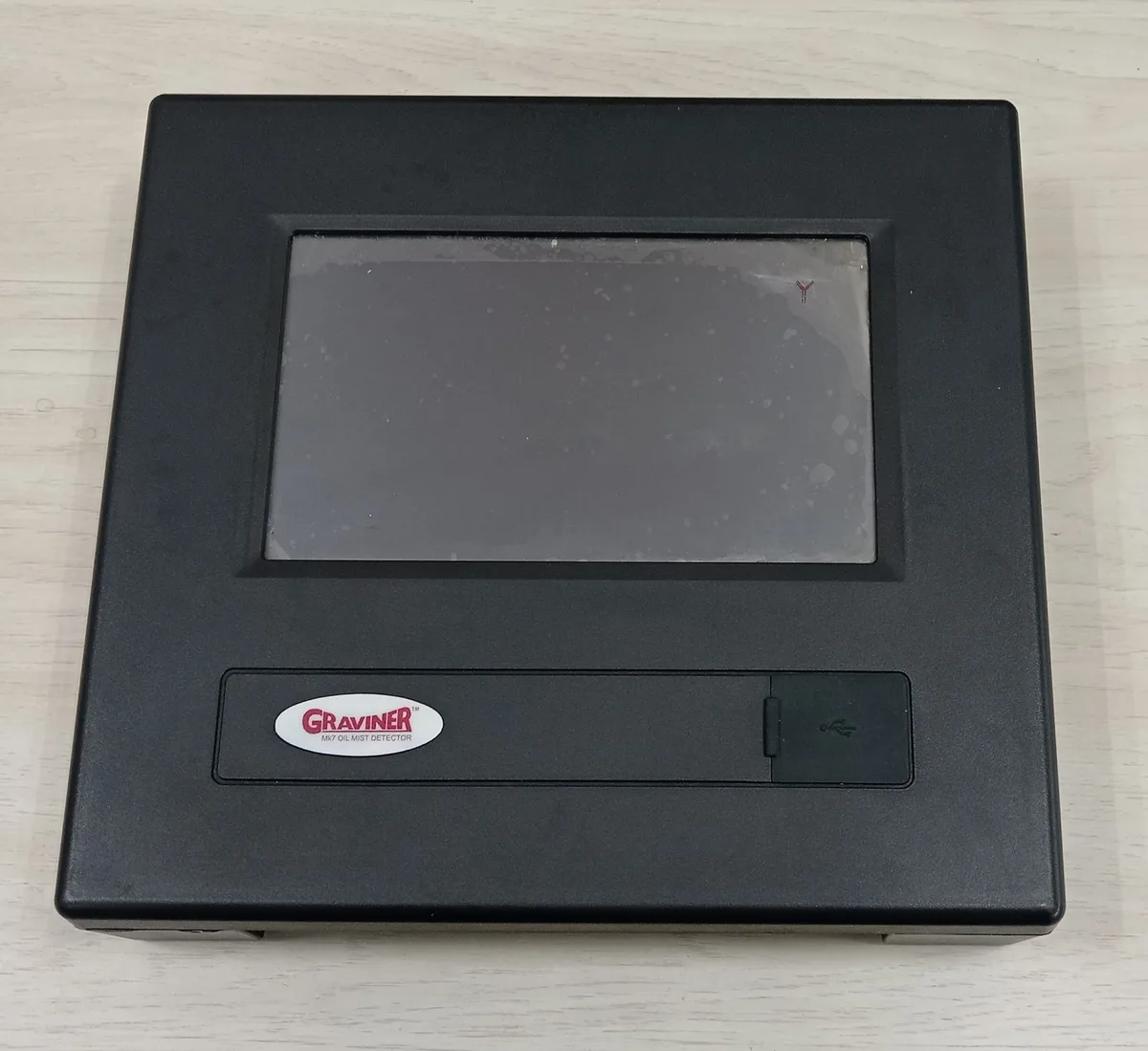
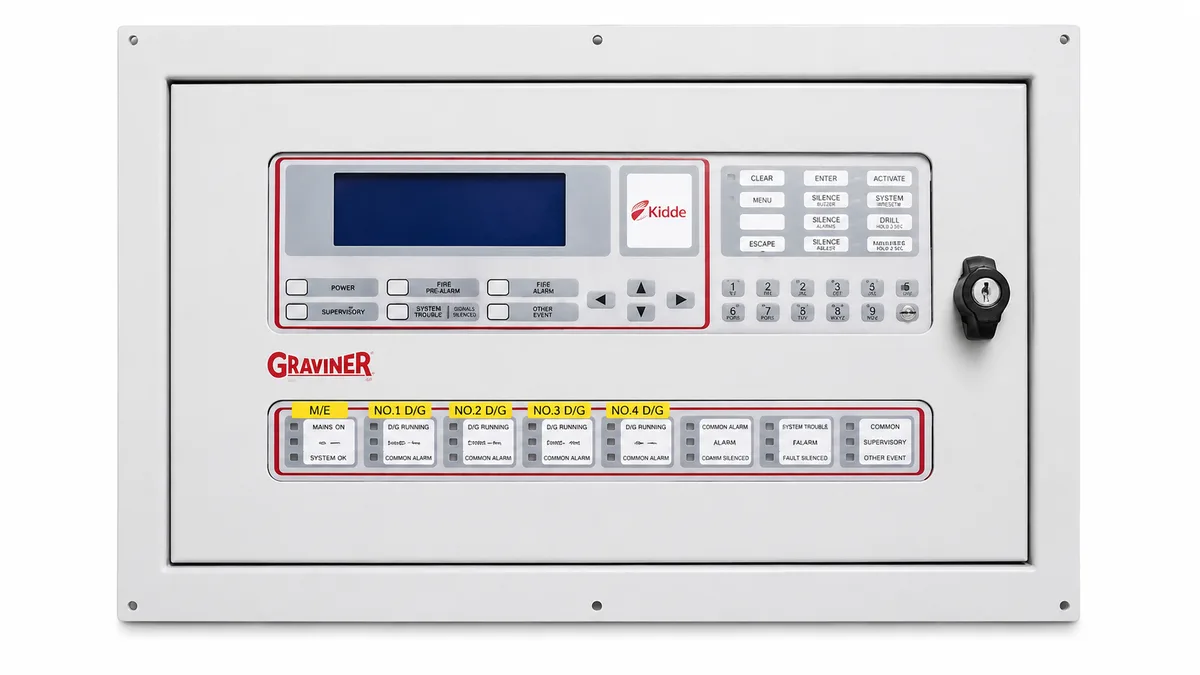
The Graviner MK6 Oil Mist Detector is an advanced marine engine safety system designed to continuously monitor oil mist concentration inside the crankcase of diesel engines. Developed as the successor to earlier Graviner systems, the MK6 introduced an analogue addressable architecture, individual detector heads, and the elimination of traditional sampling pipes, providing faster detection, simplified installation, and improved system reliability.
Designed for commercial marine applications, the MK6 continuously monitors each crankcase compartment and provides early warning of abnormal oil mist levels that may result from overheating bearings, lubrication failure, excessive friction, or other developing mechanical faults. Early detection enables engine room personnel to investigate potential problems before they lead to costly engine damage or crankcase explosions.
The Graviner MK6 Oil Mist Detector has been widely installed on commercial cargo vessels, tankers, offshore support vessels, passenger ships, and marine power generation engines, making it one of the most recognized oil mist detection systems in the marine industry.
At Ship Care Service, we supply genuine Graviner MK6 Oil Mist Detectors, detector heads, control units, spare parts, accessories, and technical support for marine operators worldwide.
What is the Graviner MK6 Oil Mist Detector?
The Graviner MK6 Oil Mist Detector is an engine-mounted oil mist monitoring system that uses individual detector heads installed directly on each crankcase compartment rather than relying on centralized sampling pipework.
Each detector continuously measures oil mist density using an optical light-scatter detection principle and transmits digital data to the central control unit. The control unit continuously evaluates every detector, compares measured values with programmed alarm thresholds, and immediately alerts engine personnel whenever abnormal conditions are detected.
This distributed monitoring approach provides faster detection, improved fault localization, and reduced maintenance compared with older sampling-pipe systems.
Why Oil Mist Detection is Essential
Marine diesel engines operate under high temperatures, heavy loads, and continuous service conditions. Even minor mechanical faults can generate excessive heat, causing lubricating oil to vaporize and form oil mist inside the crankcase.
Continuous oil mist monitoring helps operators:
Detect abnormal engine conditions at an early stage
Reduce the risk of crankcase explosions
Protect bearings and rotating components
Improve engine reliability
Reduce unplanned downtime
Support preventive maintenance programs
Minimize costly engine repairs
By identifying developing faults early, maintenance can be scheduled before significant engine damage occurs.
How the Graviner MK6 Works
Unlike earlier Graviner models, the MK6 eliminates centralized sampling pipes and instead uses intelligent detector heads mounted directly on the engine.
Step 1 – Continuous Local Monitoring
Each detector head continuously monitors the oil mist concentration within its assigned crankcase compartment.
Step 2 – Optical Light Scatter Detection
The detector measures oil mist concentration using an optical light-scatter principle, providing high sensitivity while minimizing false alarms.
Step 3 – Digital Communication
Each detector converts its measurements into digital signals and transmits them to the central control unit through the system communication network.
Step 4 – Alarm Activation
If oil mist concentration exceeds the programmed alarm threshold, the control unit immediately activates visual and audible alarms while identifying the affected detector location, enabling engineers to respond quickly.
Key Features of the Graviner MK6 Oil Mist Detector
Addressable Detector Technology
Each detector head has its own address, allowing the control unit to identify the exact crankcase compartment where elevated oil mist has been detected.
No Sample Pipes Required
Unlike traditional oil mist detection systems, the MK6 eliminates sampling pipes, reducing installation complexity, maintenance requirements, and potential leakage points.
Fast System Response
The distributed detector architecture enables rapid monitoring of multiple cylinders, allowing early identification of abnormal engine conditions.
Optical Detection Technology
The MK6 uses optical light-scatter measurement to detect extremely low oil mist concentrations while maintaining excellent resistance to false alarms.
Modular Design
Individual detector heads can be replaced independently, reducing maintenance time and simplifying servicing without replacing the complete monitoring system.
Reliable Marine Construction
The MK6 is engineered for long-term operation in demanding marine engine room environments, including:
Typical Applications
The Graviner MK6 Oil Mist Detector is suitable for a wide range of marine diesel engine installations.
Typical applications include:
Commercial Cargo Ships
Continuous crankcase monitoring for propulsion and auxiliary engines.
Oil & Chemical Tankers
Reliable engine protection during demanding cargo operations.
Container Ships
Supports safe and uninterrupted engine operation during long voyages.
Bulk Carriers
Provides early warning of developing crankcase faults.
Offshore Support Vessels
Reliable oil mist monitoring in offshore operating environments.
Passenger Ships
Continuous engine protection for propulsion and auxiliary power systems.
Marine Power Generation
Suitable for onboard diesel generator engines and stationary marine power applications.
Shipyards
Installed during new vessel construction, engine upgrades, and retrofit projects.
Industries We Serve
The Graviner MK6 Oil Mist Detector is widely used across:
Who Uses the Graviner MK6?
Typical users include:
Why Choose the Graviner MK6 Oil Mist Detector?
The Graviner MK6 is trusted by marine operators because it offers:
Intelligent addressable monitoring
Individual detector heads
Optical light-scatter sensing
No sampling pipework
Fast fault identification
Reliable alarm performance
Modular maintenance
Proven marine reliability
Its modern detector architecture and proven operational performance make the MK6 an excellent solution for protecting marine diesel engines against developing crankcase faults while reducing maintenance complexity.
Technical Overview
The Graviner MK6 Oil Mist Detector is an intelligent addressable crankcase oil mist monitoring system designed to provide continuous protection for marine diesel engines. Unlike conventional sampling-type oil mist detectors, the MK6 utilizes individual optical detector heads installed directly on each crankcase compartment. Each detector continuously measures oil mist concentration and communicates with the central control unit for real-time monitoring.
The distributed detector architecture improves fault identification, minimizes maintenance requirements, and enhances overall system reliability by eliminating long sampling pipes and mechanical sampling components.
Note: Technical specifications may vary depending on engine configuration, number of detector heads, and equipment version. Always verify installation details using the equipment nameplate and manufacturer's documentation.
| Specification |
Details |
| Product Name |
Graviner MK6 Oil Mist Detector |
| Manufacturer |
Kidde Graviner |
| Equipment Type |
Addressable Marine Oil Mist Detection System |
| Detection Principle |
Optical Light Scatter Detection |
| Monitoring Method |
Individual Addressable Detector Heads |
| Communication |
Digital Addressable Network |
| Display |
Digital Control & Alarm Display |
| Alarm Function |
Visual & Audible Alarm |
| Installation |
Marine Diesel Engine |
| Typical Application |
Main & Auxiliary Marine Diesel Engines |
Main Components of the Graviner MK6 Oil Mist Detector
The MK6 consists of several integrated components that provide reliable engine monitoring.
Central Control Unit
The control unit serves as the primary monitoring and processing system.
Its functions include:
The controller continuously receives information from every connected detector head.
Addressable Detector Heads
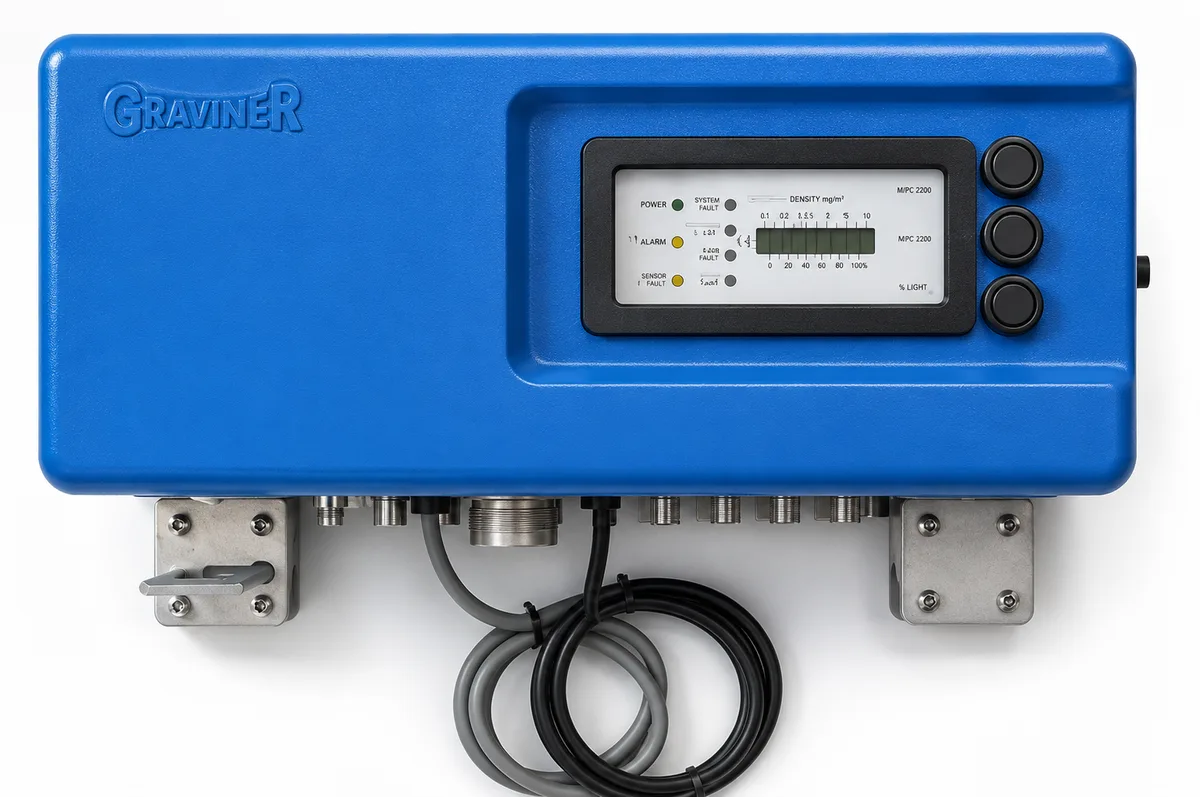
Each crankcase compartment is fitted with an individual detector head.
Each detector performs:
Continuous oil mist monitoring
Optical measurement
Digital signal processing
Communication with the controller
Because each detector has its own electronic address, the control unit can immediately identify the affected crankcase compartment whenever an alarm occurs.
Optical Sensor Assembly
Each detector contains an optical sensing system that measures oil mist concentration using the light scatter principle.
This technology provides:
Communication Network
Detector heads communicate digitally with the central control unit through dedicated communication wiring.
The communication system allows:
Alarm System
When abnormal oil mist concentration is detected, the system activates:
Audible Alarm
Visual Alarm
Alarm Output Signal
Depending on the vessel's automation system, alarm signals may also be transmitted to:
Working Principle
The Graviner MK6 continuously monitors crankcase conditions whenever the engine is operating.
Step 1 – Continuous Local Detection
Each detector head continuously monitors oil mist concentration within its assigned crankcase compartment.
Step 2 – Optical Measurement
The detector measures oil mist using an optical light scatter method.
As oil mist concentration increases, the amount of scattered light changes, allowing the detector to calculate oil mist density accurately.
Step 3 – Digital Communication
Measurement data is transmitted continuously from each detector head to the central controller.
The controller evaluates every detector independently while supervising overall system performance.
Step 4 – Alarm Activation
If oil mist concentration exceeds the programmed alarm threshold, the controller immediately:
Advantages of the Graviner MK6
Individual Detector Monitoring
Every crankcase compartment is monitored independently, allowing rapid identification of developing faults.
No Sampling Pipework
The elimination of sampling pipes provides several advantages:
Continuous Engine Protection
The detector provides uninterrupted crankcase monitoring throughout engine operation.
Fast Fault Identification
Addressable detector technology enables engineers to immediately identify the crankcase compartment where abnormal oil mist has been detected.
Reliable Marine Construction
The MK6 is designed for reliable operation in demanding engine room environments, including:
High temperatures
Continuous vibration
Humidity
Heavy engine loading
Long operating hours
Modular Maintenance
Individual detector heads can generally be serviced or replaced independently, minimizing maintenance time and reducing operational interruptions.
Routine Maintenance
Regular inspection helps maintain reliable system performance.
Before Engine Operation
Inspect:
Control unit status
Detector communication
Alarm indicators
Power supply
System diagnostics
Confirm that the detector indicates normal operation before engine start.
Weekly Inspection
Check:
Detector head condition
Display operation
Alarm indicators
Electrical connections
Visible contamination
Inspect for physical damage or excessive dirt accumulation.
Monthly Inspection
Inspect:
Detector communication
Optical sensor condition
Wiring connections
Alarm outputs
Controller diagnostics
Clean detector surfaces if contamination is observed.
Annual Maintenance
Recommended annual maintenance includes:
Complete functional inspection
Detector performance verification
Optical sensor inspection
Electrical inspection
Alarm testing
Communication verification
Calibration verification (if applicable)
Maintenance activities should be documented within the vessel's Planned Maintenance System (PMS).
Common Operational Problems
Although the Graviner MK6 is designed for dependable operation, some issues may occur during long-term service.
Problem: False Alarm
Possible Causes
Detector contamination
Moisture accumulation
Electrical interference
Damaged detector head
Recommended Solution
Inspect and clean the detector head, verify wiring connections, and confirm proper installation.
Problem: Detector Communication Failure
Possible Causes
Recommended Solution
Inspect communication wiring, verify detector connections, and replace defective components if required.
Problem: Display Not Operating
Possible Causes
Recommended Solution
Verify input power, inspect wiring, and check protective devices before further troubleshooting.
Problem: Alarm Does Not Activate
Possible Causes
Recommended Solution
Verify alarm outputs, inspect communication status, and perform functional testing according to maintenance procedures.
Problem: Frequent Fault Indications
Possible Causes
Recommended Solution
Inspect the complete system, clean detectors where appropriate, and replace damaged components if necessary.
Calibration Recommendations
To maintain reliable detection performance, periodic functional testing and calibration verification should be performed according to the manufacturer's recommendations and the vessel's maintenance procedures.
Calibration is recommended:
During scheduled maintenance
After replacing detector heads
Following major engine repairs
After prolonged equipment shutdown
As specified in the vessel's Planned Maintenance System (PMS)
Genuine Spare Parts Available
Ship Care Service supplies genuine replacement parts for the Graviner MK6 Oil Mist Detector, including:
Addressable Detector Heads
Optical Sensor Assemblies
Central Control Unit Components
Communication Modules
Wiring Harnesses
Alarm Modules
Display Components
Power Supply Components
Connectors
Mounting Hardware
Replacement Accessories
Availability depends on the equipment version and production series.
Buying Guide
Before purchasing a Graviner MK6 Oil Mist Detector or replacement components, consider the following:
Verify Engine Compatibility
Confirm that the detector is compatible with your engine model and existing monitoring system.
Confirm Equipment Details
Providing the equipment model, serial number, and detector configuration helps identify the correct replacement unit or spare parts.
Choose Genuine Components
Using genuine replacement parts helps maintain:
Reliable monitoring
System compatibility
Long service life
Safe engine operation
Work with an Experienced Supplier
Select a supplier capable of providing technical support, genuine products, and after-sales assistance for marine engine safety systems.
Why Marine Operators Choose the Graviner MK6
The Graviner MK6 remains a preferred crankcase monitoring solution because it provides:
Addressable detector technology
Optical light scatter detection
Continuous engine monitoring
Fast fault localization
Modular maintenance
Reliable digital communication
Durable marine construction
Long operational service life